By Jorge Orenday · September 1, 2026
Choosing a nearshore software development company used to come down to a familiar set of questions: Can the team work in your time zone? Do they have the right technical skills? Will communication be easy? Are their rates competitive?
Those questions still matter. But in 2026, they are no longer enough.
AI-assisted development has changed what a software partner can deliver, and what buyers should expect. A team that simply uses an AI coding assistant may produce more code, but that does not necessarily mean it will deliver better software. The real differentiator is whether a nearshore partner can combine AI speed with senior engineering judgment, security discipline, and clear accountability for what reaches production.
This guide offers a practical framework for evaluating nearshore software development companies in the AI era.
What has changed in nearshore software development?
The traditional nearshore model typically provides engineers who join your existing workflows as an extension of your team. That remains a valuable model for companies that need additional capacity, specialized expertise, or faster hiring.
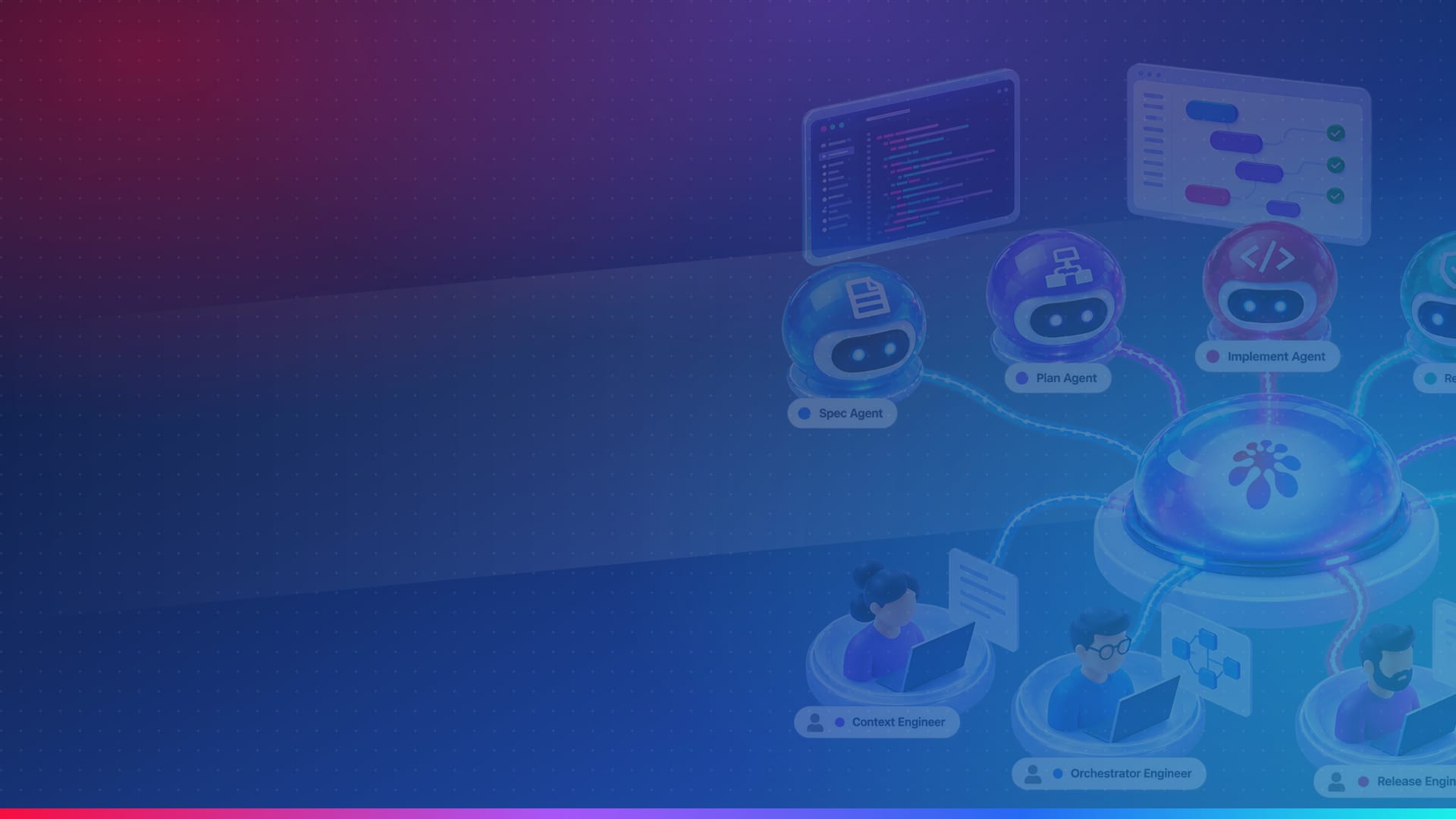
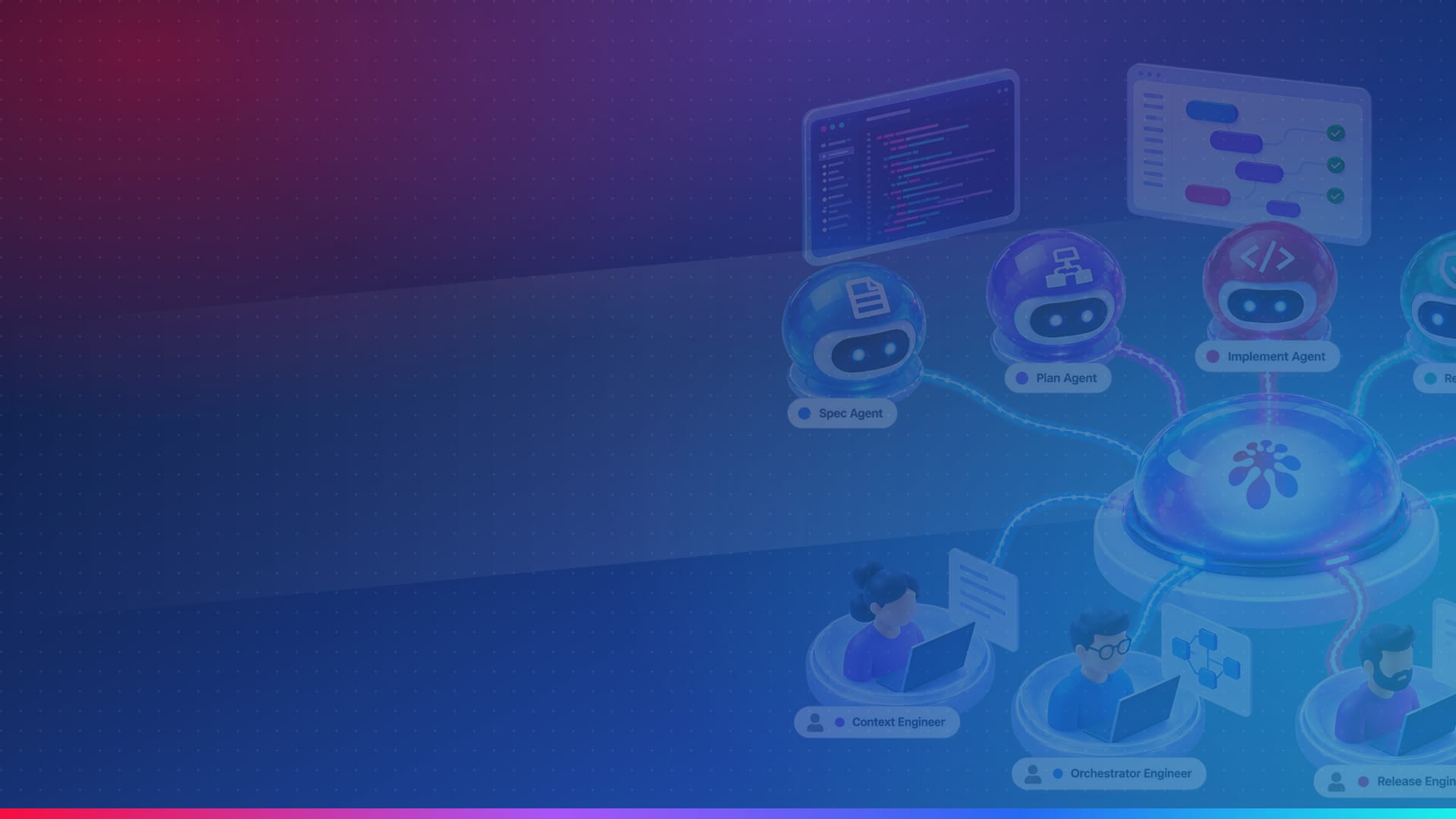
However, AI-native delivery introduces a new operating model. Instead of using AI as an occasional coding shortcut, mature teams coordinate specialized agents across the software development lifecycle:
- Specification
- Planning
- Implementation
- Review
- Deployment
The important distinction is not whether a vendor claims to be "AI-powered." It is whether AI is integrated into a repeatable delivery system, with humans responsible for decisions and quality gates.
A credible partner should be able to explain:
- How business context becomes an executable specification
- How work is divided between engineers and AI agents
- How generated code is tested and reviewed
- How security is assessed before release
- How documentation and architectural knowledge are retained
- Who is accountable when something goes wrong in production
The goal is not to replace experienced engineers. It is to give experienced engineers more leverage.
The eight criteria that matter now
1. Senior engineering judgment
AI can generate implementations quickly. It cannot reliably determine whether the requested feature is strategically correct, whether an architecture will scale, or whether a trade-off is acceptable for your business.
When evaluating a nearshore software development company, ask to meet the actual senior engineers who will guide the engagement. Look for people who can:
- Challenge unclear requirements
- Identify architectural risks early
- Explain trade-offs in business terms
- Work within the realities of your existing codebase
- Make pragmatic decisions under delivery pressure
The strongest partners are not defined by the number of developers they can place. They are defined by the quality of judgment they bring to complex decisions.
2. A real AI-native delivery workflow
Many vendors now mention AI in proposals. Fewer can demonstrate a coherent workflow for using it responsibly.
Ask for a walkthrough of how a feature moves from an idea to production. The process should include clear ownership at each stage, rather than an informal collection of prompts and coding tools.
For example, an AI-native development team may use:
- A context specialist to translate business goals into specifications
- Orchestrator engineers to direct multiple agents
- Automated agents for implementation and testing
- A release engineer to manage quality gates and deployments
- A security engineer involved from design through release
This approach creates leverage without treating generated output as finished software.

3. Human accountability at every gate
A vendor should be able to answer one simple question: Who owns the decision to ship?
If the answer is "the AI reviewed it," keep asking questions.
The gap is measurable. Veracode's Spring 2026 GenAI Code Security Report tested 150+ models across Java, JavaScript, C# and Python and found that roughly 45% of AI-generated code introduced a security flaw, a pass rate that has stayed flat between 45% and 55% for two years, even as the newest flagship models pushed syntax correctness past 95%. Models got dramatically better at writing code that works and no better at writing code that's safe. Buying the next model release does not close that gap; a review layer does.
At a minimum, a responsible delivery model should include named human owners for:
- Requirements and technical context
- Architecture and implementation plans
- Code quality and test coverage
- Security and compliance
- Release readiness and production deployment
The more code AI helps generate, the more important these gates become.
4. Security and governance for AI-assisted development
Security should not be treated as a final checklist item. It needs to be part of the development process from the beginning.
The failure modes are specific enough to design gates around. Nearly 20% of AI code samples in a 2025 USENIX Security study referenced a package that does not exist, though the split matters: about 5% for commercial models versus 22% for open-source ones, which makes this a workflow risk more than a model risk. Adaptive prompt-injection attacks succeed against agentic systems more than 85% of the time, and published defenses stop fewer than half. And in February 2026, Wiz disclosed that Moltbook, a vibe-coded AI social platform, had exposed 1.5 million agent auth tokens and roughly 35,000 user emails, the root cause was a Supabase database shipped with no row-level security policies. Not an exotic exploit. One configuration nobody reviewed.
Ask prospective partners:
- What data can AI tools access?
- Is your source code sent to third-party model providers?
- Are prompts, outputs, and logs retained?
- How are secrets and credentials protected?
- How are open-source licenses and intellectual property handled?
- How are vulnerabilities detected before deployment?
- Can the team work within your compliance requirements?
For AI product development, also ask about model-specific risks such as prompt injection, data leakage, hallucinations, access control, and monitoring.
A partner that talks only about speed, but not about data governance, threat modeling, testing, and release controls is not ready to manage production-grade AI development.
5. Enterprise-grade quality
A successful engagement produces more than code. It should leave your company with software that can be operated, maintained, and extended.
Evaluate whether the partner delivers:
- Automated tests
- Clear technical documentation
- Reproducible environments
- QA and staging workflows
- Observability and operational metrics
- Deployment automation
- Runbooks and handoff materials
- A clear process for managing technical debt
A useful test is to ask what happens after the initial release. Who supports the system? How are incidents handled? How does the team document decisions? What happens if a key engineer leaves?
If the answer depends on individual memory, the delivery model has a knowledge-retention problem.
6. Time-zone and cultural alignment
Nearshore development remains attractive because collaboration happens during overlapping working hours. This is particularly valuable for AI initiatives, where teams often need rapid iteration across product, engineering, design, security, and operations.
Do not settle for a general statement such as "we work with US clients." Ask for specifics:
- How many hours of daily overlap are guaranteed?
- Will senior engineers attend your key meetings?
- How are urgent issues escalated?
- What communication tools does the team use?
- How comfortable are engineers explaining technical trade-offs in English?
- How does the company prepare its engineers for distributed collaboration?
Nearshore teams in Mexico and Latin America can offer strong time-zone alignment for US-based companies, but location alone does not guarantee cultural fit. Evaluate the working relationship, not just the map.
7. Track record and references
Ask for evidence that matches your situation. A vendor with experience building simple marketing websites may not be the right partner for a multi-tenant B2B SaaS platform, regulated workflow, or AI-enabled product.
If BairesDev is on your shortlist, we wrote an honest comparison of BairesDev and ArkusNexus that shows where each one fits.
Look for:
- Long-term client relationships
- Similar product and technical complexity
- Experience maintaining systems over multiple releases
- References from CTOs, VPs of Engineering, or product leaders
- Case studies with measurable outcomes
- The opportunity to interview proposed team members
- A paid discovery sprint or trial engagement
Do not evaluate a company only by its largest client logo or its total headcount. The relevant question is whether the proposed team has successfully solved problems like yours.
8. Transparent engagement and pricing
Nearshore development can be structured in several ways:
- Staff augmentation
- Dedicated teams
- Managed delivery teams
- Fixed-scope projects
- AI-native development Pods
Each model has different levels of flexibility, control, and delivery accountability.
Staff augmentation fits when your internal team already owns architecture, planning, and delivery accountability, and you only need hands. If you need a partner to own an outcome rather than fill seats, a managed team or an AI-Native Development Pod is the right structure. That's the model we build.
Clarify:
- What is included in the price?
- Who owns delivery decisions?
- How are scope changes handled?
- How quickly can the team scale?
- What happens if an engineer needs to be replaced?
- Are AI tools, cloud costs, and specialized services included or billed separately?
The lowest hourly rate is not always the lowest total cost. Rework, coordination overhead, security incidents, and delayed releases can quickly outweigh a modest rate difference.
Nearshore vs. offshore vs. in-house
| Delivery model | Strengths | Trade-offs | Best fit |
|---|---|---|---|
| In-house team | Maximum control, deep product context, direct alignment with company goals | Higher fixed costs, slower hiring, limited access to specialized skills | Companies with strong internal hiring capacity and long-term product ownership |
| Nearshore partner | Overlapping time zones, real-time collaboration, cultural alignment, flexible access to senior talent | Requires clear communication, governance, and partner management | Product companies that need additional capacity, specialized expertise, or managed delivery |
| Offshore partner | Broad talent pool, extended time-zone coverage, and potentially lower hourly rates | Greater communication friction, limited working-hour overlap, and more coordination overhead | Well-defined work where cost or continuous time-zone coverage is the primary priority |
For many B2B SaaS companies, the decision is not "nearshore or in-house." The strongest model may be a nearshore team working alongside internal engineers, using the same backlog, tools, standards, and release process.
The right partner should increase your internal team's leverage, not create a parallel organization that is difficult to manage.
Red flags to avoid
Be cautious when a nearshore software development company:
- Promises extraordinary speed without explaining its quality controls
- Treats AI-generated code as production-ready by default
- Cannot identify a human owner for security or release decisions
- Shows demos but cannot discuss maintenance, testing, or operations
- Uses fear-based messaging about developers becoming obsolete
- Offers generic AI expertise without relevant project evidence
- Will not let you meet the engineers assigned to the work
- Hides pricing, replacement policies, or ownership terms
- Cannot explain how your source code and data are protected
- Measures success only in lines of code or hours billed
The best AI-native partners are not selling hype. They are showing a better way to deliver reliable software.
A practical scorecard
| Category | Key questions |
|---|---|
| Seniority | Who are the senior engineers guiding the work? Can they explain architectural and business trade-offs? |
| AI workflow | How does AI support specification, planning, implementation, review, and deployment? |
| Human gates | Who owns requirements, architecture, code review, security, and release decisions? |
| Quality | What testing, documentation, environments, observability, and handoff materials are included? |
| Security | How are source code, data, secrets, intellectual property, vulnerabilities, and compliance requirements protected? |
| Collaboration | How much time-zone overlap is guaranteed? How are communication and escalation handled? |
| Track record | Has the proposed team delivered systems with similar product, technical, and operational complexity? |
| Commercial model | What is included in the price? Who owns outcomes? How are scope changes and team replacements handled? |
Weight the categories according to your risks. A regulated company may give security and compliance the highest weighting. A scaling SaaS company may prioritize architecture, seniority, and delivery ownership.
How ArkusNexus approaches AI-native nearshore delivery
At ArkusNexus, our AI-Native Development Pod combines senior nearshore engineers with specialized AI agents across the full development lifecycle.
Every engineer in a Pod is a senior Product Engineer who takes a requirement from business context to release. The work covers three activities:
- Context: turning goals into a spec agents can execute.
- Orchestration: directing the agents and reading the evidence they produce.
- Release: QA, staging, rollback and production.
Security review runs across every stage and can block a release.
Agents accelerate the work. Human engineers own every gate.
The model is designed for companies that already have a product and backlog but lack the capacity to modernize delivery at the same time. It can work alongside an existing engineering organization or serve as a complete delivery unit.
ArkusNexus brings more than 23 years of nearshore software development experience, 250+ vetted engineers, 150+ historical clients, and a 92% client satisfaction rate. Our teams work across San Diego, Tijuana, Colima, and Medellín, providing full US time-zone overlap.
For organizations exploring AI beyond engineering, our AI solutions team also helps identify and implement high-impact opportunities across business workflows.
Final takeaway
The best nearshore software development company in 2026 is not necessarily the one with the most AI tools, the lowest rates, or the biggest talent pool.
It is the partner that can combine:
- Senior engineering judgment
- A repeatable AI-native workflow
- Human accountability
- Strong security and quality practices
- Real-time collaboration
- Relevant delivery experience
- Transparent commercial terms
Use those criteria to evaluate partners objectively. Ask to see the workflow, meet the engineers, inspect the quality gates, and verify who owns the release decision.
If you are evaluating a nearshore partner for an existing product backlog, talk to an ArkusNexus engineer. We can walk through how an AI-Native Development Pod would work with your team, tools, and roadmap.
You can also subscribe to the ArkusNexus newsletter and request the nearshore software development evaluation guide for more practical guidance on selecting a partner in the AI era.
You can also explore the ArkusNexus blog for more guidance on AI-native software development, engineering team scaling, and practical AI adoption.
Frequently asked questions
What is a nearshore software development company?
A nearshore software development company provides engineering services from a geographically close region, often with overlapping working hours, similar business culture, and easier real-time collaboration than an offshore provider.
Why does AI-native delivery matter when choosing a nearshore partner?
AI-native delivery matters because AI changes how software is specified, built, reviewed, and released. A partner should demonstrate not only that it uses AI tools, but also that it has a repeatable workflow, strong security practices, and human accountability for the resulting software.
Is nearshore development better than offshore development?
Neither model is universally better. Nearshore development is often a stronger fit when frequent collaboration, overlapping working hours, cultural alignment, and fast iteration are important. Offshore development may be appropriate for well-defined work where lower cost or broader time-zone coverage is the priority.
Should a nearshore partner replace an in-house engineering team?
Not necessarily. Many companies use nearshore teams to extend their internal capabilities, accelerate a specific initiative, or introduce new delivery practices. The best structure depends on your product roadmap, internal expertise, and desired level of delivery ownership.
What should I ask a nearshore software development company about AI-generated code?
Ask how AI-generated code is tested, reviewed, secured, documented, and approved for release. You should also clarify what data AI tools can access, how intellectual property is protected, and which named engineers own each quality gate.