AI-generated code is safe to ship only when it passes the same: or stronger: engineering controls as human-written code.
That distinction matters.
Coding agents can generate working code in minutes. They can also introduce hallucinated APIs, insecure configurations, hidden dependencies, authorization gaps, and compliance problems at the same speed. The code may compile, pass a narrow test, and still create material risk in production.
For CTOs and engineering leaders, the decision is not whether AI-generated code is inherently good or bad. The decision is whether your delivery system can validate it before it reaches customers.
AI accelerates implementation. Senior engineers own the release.
The short answer: not by default
AI-generated code should enter your codebase as untrusted input.
Risk signal
- Veracode's 2026 GenAI Code Security Report found that 44% of AI-generated code contains known security vulnerabilities, and the overall security pass rate has remained stuck at roughly 55-56% across more than 100 models tested.
- In the Moltbook post-mortem, an app built 100% with AI and zero hand-written code exposed 1.5 million auth tokens and 35,000 emails in production. Source: Post-Mortem of Moltbook and the 1.5 Million Token Leak.
That does not mean teams should avoid it. It means generated code must move through a controlled software development lifecycle with:
- Clear requirements and approved context
- Human architectural judgment
- Automated testing and security scanning
- Dependency and configuration review
- Traceability for regulated functionality
- Named ownership at every release gate
The OWASP Top 10 remains a practical starting point for identifying common web application risks. The NIST Secure Software Development Framework provides a broader foundation for preparing the organization, protecting the software, producing secure releases, and responding to vulnerabilities.
Neither framework assumes that generated code is safe because a model produced it. Both reinforce the same operating principle: security is a lifecycle responsibility.
Why AI-generated code creates enterprise risk
1. It can look correct while being wrong
Large language models optimize for likely, useful output. They do not understand your product, threat model, data boundaries, or business obligations unless that context is deliberately supplied and verified.
The result is an illusion of correctness.
Generated code may:
- Call an API that does not exist or behaves differently than expected
- Use deprecated methods or outdated security patterns
- Handle the normal path while failing on edge cases
- Return plausible but incorrect business logic
- Omit error handling, audit logging, or authorization checks
- Pass unit tests without satisfying the actual requirement
A successful build is not proof of a safe implementation. It is only proof that the compiler and current tests accepted the implementation.
2. Secure defaults are not guaranteed
AI coding agents frequently generate common patterns rather than patterns designed for your specific security requirements.
Reviewers must look for:
- SQL, command, or template injection paths
- Missing input validation and output encoding
- Broken authentication or authorization
- Overly broad IAM permissions
- Hardcoded credentials or unsafe secret handling
- Weak cryptography or insecure random number generation
- Excessive data exposure in logs and API responses
- Insecure container, cloud, or infrastructure configuration
This is especially important for infrastructure-as-code. A generated Terraform, Kubernetes, or cloud policy file can be syntactically valid while exposing a service to the public internet or granting more privileges than the workload requires.
Working infrastructure is not necessarily hardened infrastructure.
3. Dependencies can arrive unnoticed
A coding agent may recommend a package because it is popular, familiar, or present in its training data. That does not make the package appropriate for your product.
Every generated dependency should be checked for:
- Known vulnerabilities and CVEs
- Maintenance activity and ownership
- License compatibility
- Transitive dependencies
- Version pinning and update strategy
- Data handling and network behavior
- Compatibility with your approved technology standards
Software composition analysis belongs in the pull request and CI pipeline. Reviewers should also identify dependencies that were introduced indirectly by generated code.
A small utility package can expand your attack surface, licensing obligations, and long-term maintenance cost.
4. Context can create prompt-injection and data risks
Agentic software development depends on context: repositories, tickets, documentation, configuration, logs, and external sources. If that context is untrusted, an agent can be influenced by malicious instructions embedded in a file, issue, web page, or dependency.
Enterprise controls should define:
- Which repositories and documents agents may access
- Which secrets and production systems are off limits
- Which models and tools are approved
- Whether prompts, code, and business data are retained
- How external content is isolated from system instructions
- Which actions require explicit human approval
The objective is not to remove context. It is to make context controlled, attributable, and appropriate for the task.

The five gates that make generated code shippable
A safe AI-native software development process does not create a separate standard for AI code. It makes the standard visible and repeatable.
Gate 1: Spec
Start with an approved specification that defines:
- Business behavior
- Acceptance criteria
- Data classification
- Security requirements
- Authorization boundaries
- Performance expectations
- Compliance obligations
- Failure and rollback behavior
A Product Engineer signs this gate. The goal is to give agents an executable definition of the work: not a vague prompt that leaves critical decisions to the model.
Gate 2: Plan
The plan breaks the specification into implementation units, dependencies, test requirements, and checkpoints.
The team identifies high-risk areas before code is generated. Authentication, payments, personally identifiable information, encryption, infrastructure, and third-party integrations receive a higher review tier than routine interface changes.
The plan also defines what the agent is allowed to change and what requires escalation.
Gate 3: Implement
Agents generate code, tests, documentation, and supporting artifacts against the approved plan.
The Product Engineer directs the agents, manages context, splits work into bounded tasks, and verifies that implementation stays within scope.
Generated code should remain attributable. Record the tool, model, relevant instructions, source context, and human decisions where your governance requirements call for it.
Gate 4: Review
Automated verification runs before human approval:
- Unit and integration tests
- Static application security testing
- Software composition analysis
- Secrets detection
- Infrastructure and cloud configuration scanning
- Container and image scanning
- Formatting, linting, and type checks
- API contract and regression tests
Then a senior engineer reviews the behavior, not only the diff.
The review must ask:
- Does this implement the requirement or merely resemble it?
- Can untrusted input reach a sensitive operation?
- Are permissions limited to the minimum required?
- Are failures handled safely?
- Did the implementation introduce a dependency or external call?
- Is sensitive data exposed through logs, errors, or responses?
- Do tests cover abuse cases and boundary conditions?
- Can the team explain why this design is correct?
Security review covers threats and compliance, and it can block a release. Critical changes should not advance because automated checks are green alone.
Gate 5: Deploy
The Product Engineer owns the promotion path through QA, staging, and production.
That includes:
- Environment-specific configuration review
- Database migration validation
- Deployment approvals
- Monitoring and alerting
- Rollback readiness
- Post-deployment verification
- Incident ownership
Production access should be limited. The agent can prepare a deployment or recommend a change; it should not independently decide that a high-risk release belongs in production.
Agents draft. Humans approve. The pipeline enforces the difference.

A practical pre-shipment checklist
Before shipping AI-generated code, confirm the following.
Requirements and design
- The code maps to an approved requirement and acceptance criteria.
- Data flows, trust boundaries, and authorization rules are documented.
- High-risk components have an explicit review owner.
- The design includes failure, rollback, and observability behavior.
Code and dependencies
- Inputs are validated and outputs are safely encoded.
- Authentication and authorization are enforced at the correct boundaries.
- No secrets, tokens, or credentials are committed.
- Dependencies are approved, current, licensed appropriately, and scanned.
- External calls, file access, subprocesses, and network behavior are understood.
- Generated APIs and configuration references are verified against official documentation.
Verification
- Unit, integration, and regression tests pass.
- Abuse cases and negative paths are tested.
- SAST, SCA, secrets, container, and IaC scans pass.
- Critical findings block promotion rather than creating an exception by default.
- A senior engineer has reviewed the code for behavior and security.
- Regulated functionality has traceability from requirement to implementation to verification evidence.
Release
- QA and staging environments reflect production-relevant controls.
- Monitoring, alerting, and audit logs are in place.
- A rollback path has been tested or verified.
- A named engineer signs the production go or no-go.
- Residual risks are documented, accepted by the right owner, and time-bound.
A checklist does not replace engineering judgment. It ensures that judgment is applied consistently.
How the ArkusNexus AI-Native Development Pod controls risk
ArkusNexus applies AI to increase delivery throughput without removing accountability from the system.
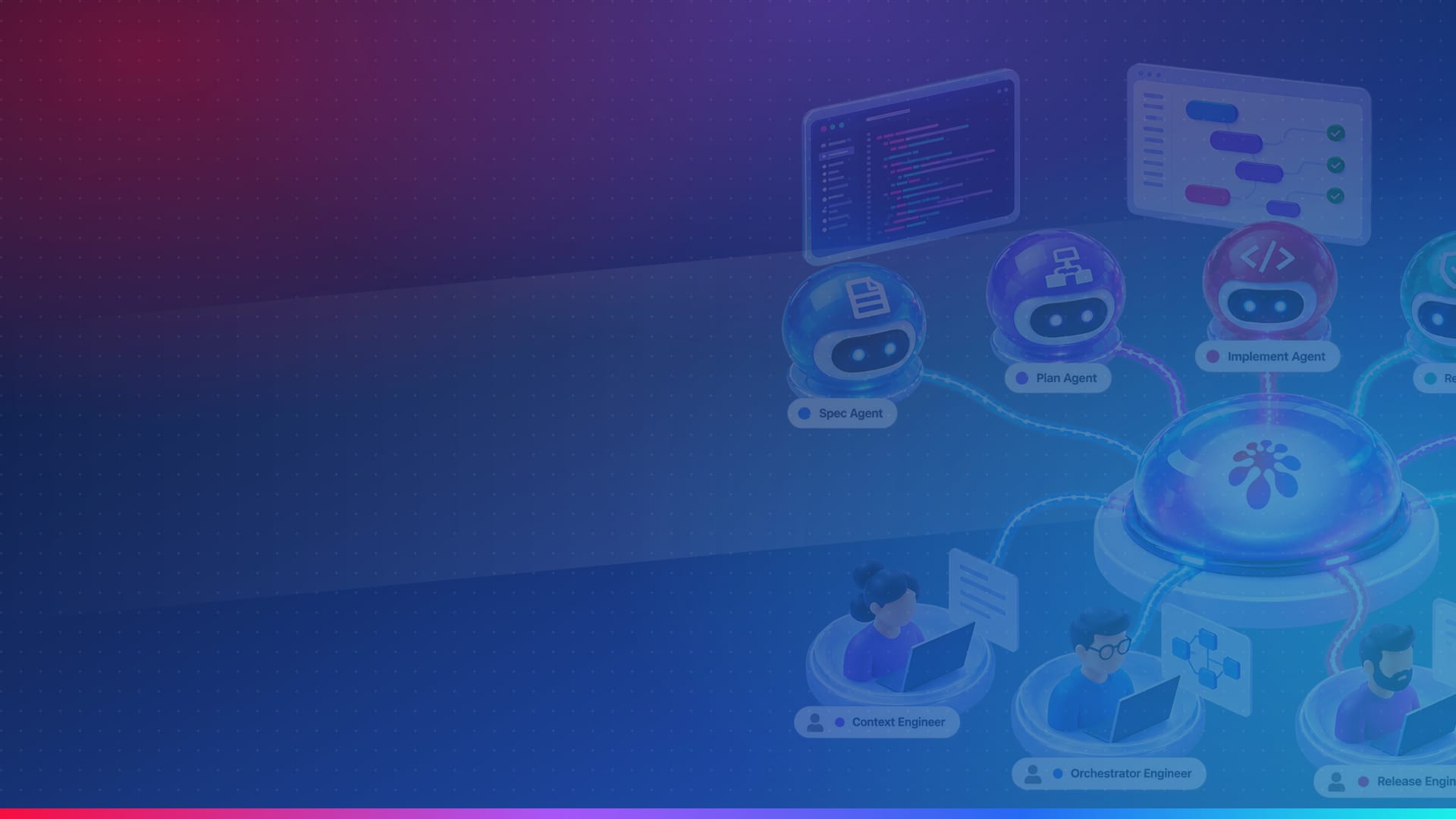
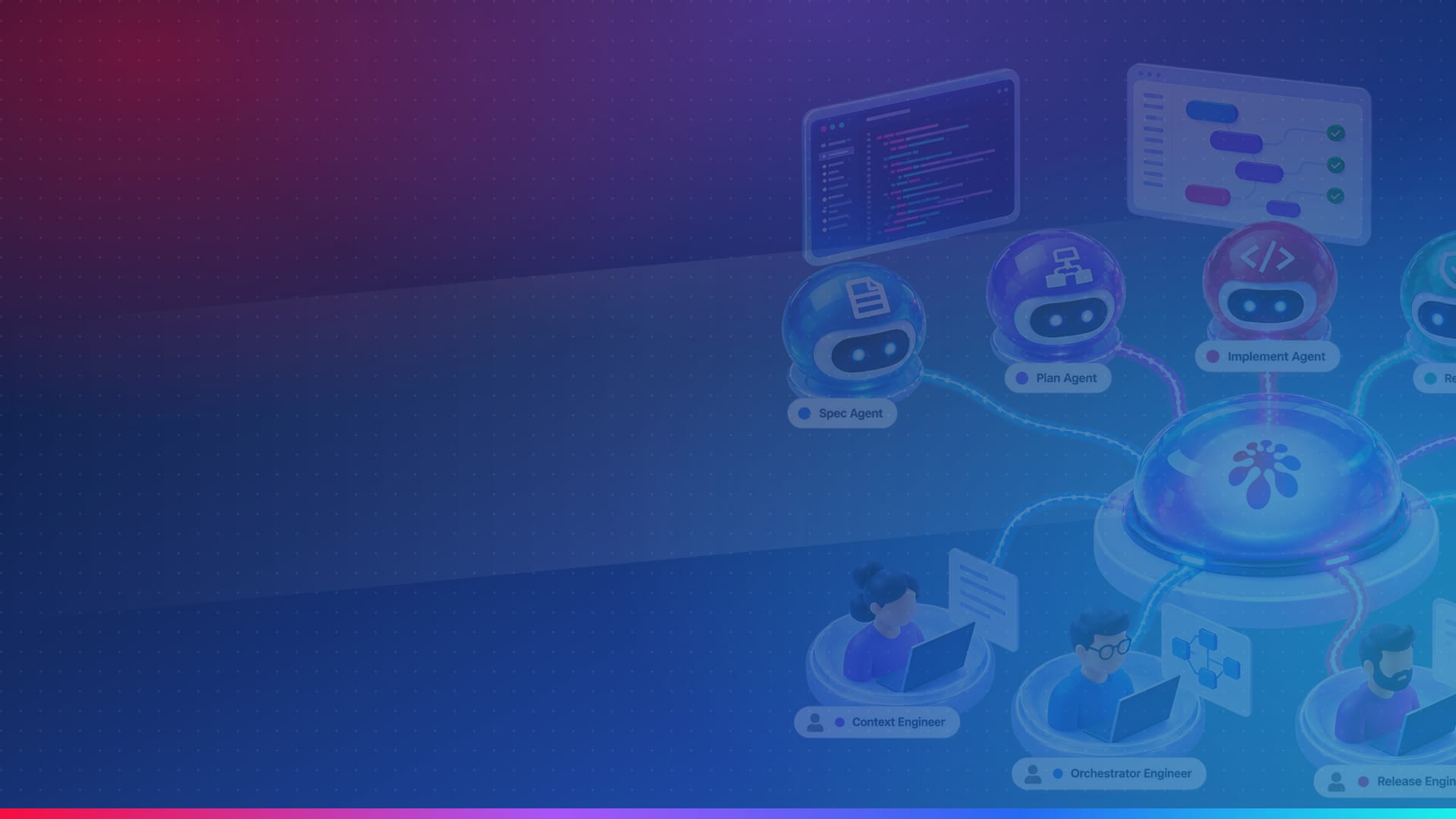
Our ArkusNexus AI-Native Development Pod combines senior engineers with specialized AI agents across spec, plan, implement, review, and deploy.
Every engineer in a Pod is a senior Product Engineer who takes a requirement from business context to release. The work covers three activities:
- Context: turning goals into a spec agents can execute.
- Orchestration: directing the agents and reading the evidence they produce.
- Release: QA, staging, rollback and production.
Security review runs across every stage and can block a release.
The Pod also delivers working proofs of concept from the spec stage, tested code, documentation, and QA, staging, and production environments. The output is a complete delivery system: not an unreviewed stream of generated code.
That model fits existing enterprise software engineering teams and backlogs. It also gives organizations a controlled way to adopt AI solutions without creating shadow AI practices across the SDLC.
ArkusNexus has spent more than 23 years shipping production software with the senior engineering judgment that AI still can't replace. AI changes the mechanics of delivery. It does not remove the standard required before production.

The standard is simple
AI-generated code is safe to ship when your system proves that it is safe enough for its intended use.
That proof comes from:
- Context before generation
- Risk-based planning
- Automated guardrails
- Security-first review
- Traceability and documentation
- Controlled deployment
- A named human accountable for the release
The right goal is not maximum generated code. It is more verified software shipped with less delay and no loss of control.
AI amplifies great engineers. It does not replace the judgment that production software requires.
If your team needs more throughput without weakening security or release discipline, talk to an ArkusNexus engineer. We will walk through how an ArkusNexus AI-Native Development Pod would run your backlog: gate by gate, from spec to deploy.